Tirzepatide for Sleep Apnea
Tirzepatide reduced sleep apnea with and without CPAP use. We review sleep apnea, the new studies, drug side effects, and cost issues.
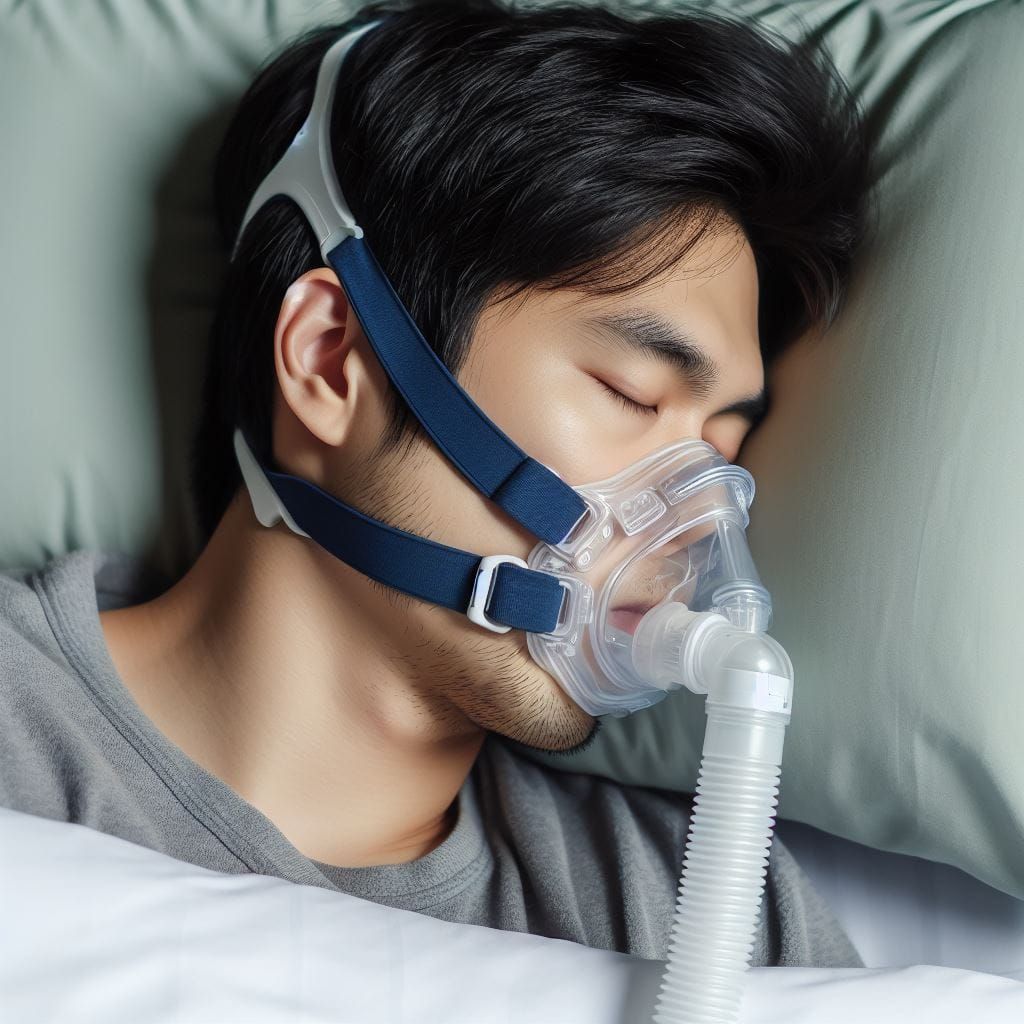
Eli Lilly announced on April 17, 2024, that tirzepatide achieved a mean apnea-hypopnea index reduction of up to 63%, meeting all primary and key secondary endpoints in two phase 3 clinical trials.
Let's review what sleep apnea is, the new studies, the potential side effects of the drug, and cost issues.
An Audio Podcast of this blog is available on Spotify https://podcasters.spotify.com/pod/show/joe-breault-md-scd/episodes/Tirzepatide-for-Sleep-Apnea-e2ij875
Sleep Apnea
Sleep apnea deprives people of good, solid sleep and reduces oxygen saturation during apnea episodes, causing symptoms and medical problems. It is divided into less common central and more common obstructive sleep apnea.
Central sleep apnea is more common as we age, and about 2.7% of men over 65 have it. It is less common in women. "The mechanism is complex, but studies have shown that central chemoreceptors U.S.d upper airway mechanics play important roles."
"Obstructive sleep apnea affects 17% of women and 34% of men in the US and has a similar prevalence in other countries" (Gottlieb & Punjabi, 2020). It occurs when one stops breathing during sleep for very short periods, either almost entirely (obstructive apnea, defined as a reduction in airflow of at least 90% for 10 seconds) or partially (hypopnea, often defined as a reduction in airflow of at least 30% for 10 seconds). Etiology: "The anatomic factors that promote pharyngeal narrowing include large neck circumference, soft tissue, bone, or vessels. Many of these structures can lead to increased surrounding pressure of the upper airway, resulting in pharyngeal collapsibility and/or insufficient space to accommodate the airflow in a portion of the upper airway during sleep."
The Apnea-Hypopnea Index (AHI) is the sum of the number of apneas and hypopneas during sleep. These are measured during a sleep study. Normal is under 5 per hour. Sleep apnea is classified as mild (AHI 5-14), moderate (AHI 15-29), or severe (AHI 30 or higher). For those using CPAP (continuous positive air pressure) for at least 6 hours nightly, the AHI normalizes to less than 5 per hour. The user can see the AHI on CPAP machines when they wake up.
These apnea episodes lead to oxygen desaturation (a 4% decrease or more for at least 10 seconds in 120 seconds). The oxygen desaturation index (ODI) is measured and calculated during a sleep study, and it is more challenging for the patient to self-monitor. However, oxygen monitoring rings are available with third-party apps like SleepHQ so a patient can monitor their nightly desaturations.
Sleep apnea can cause waking up during sleep or arousal to less deep sleep. Thus, sleep is less good, and this can lead to daytime sleepiness and safety issues. Driver sleepiness is a factor in about 100,000 car accidents each year, resulting in about 1,500 deaths. Symptoms of sleep apnea can include snoring, headaches, and reduced focus. One study by Temirbekov et al. concluded, "The subjective symptoms of sleep apnea syndrome seem to be closely related to oxygen desaturations."
Complications of sleep apnea listed by the Sleep Foundation include:
- Car accidents from drowsy driving
- Cardiovascular diseases like high blood pressure, stroke, heart failure, heart disease, and an abnormal heartbeat
- Metabolic disorders including type 2 diabetes
- Pulmonary hypertension, which is high blood pressure in the arteries of the lungs that places excess strain on the heart
- Thinking problems such as impaired memory and concentration
- Mood disturbances including irritability and a higher risk of depression
- Nonalcoholic fatty liver disease, which is an increase in fat deposits in the liver that can contribute to serious liver damage
- Anesthesia-related complications during surgery
Because most people with sleep apnea are obese, some of the above complications, such as diabetes and fatty liver, are probably due to obesity, not sleep apnea. One study by Gray et al. found that 25% of people with sleep apnea had a normal BMI. Most people with sleep apnea have not yet been diagnosed with it and may not be aware they have it.
Gottlieb & Punjabi report that sleep apnea "is associated with a 2- to 3-fold increased risk of cardiovascular and metabolic disease." However, it is not clear how many of these severe complications remain after controlling for obesity and lack of exercise. They also report that less than half of people with sleep apnea have excessive sleepiness and that "managing asymptomatic OSA to reduce cardiovascular and cerebrovascular events is not currently supported by high-quality evidence."
The Studies
As the New York Times reported:
The study’s findings have not been published in a peer-reviewed medical journal. Eli Lilly provided only a summary of its results — companies are required to announce such findings that can affect their stock price as soon as they get them.
The Eli Lilly report on the studies noted:
- SURMOUNT-OSA (NCT05412004) was a multi-center, randomized, double-blind, parallel, placebo-master protocol comparing the efficacy and safety of tirzepatide to placebo in adults living with moderate-to-severe obstructive sleep apnea and obesity who were unable or unwilling to use positive airway pressure (PAP) therapy (Study 1) and those who were and planned to stay on PAP therapy during the duration of the trial (Study 2). Under a master protocol, the trials randomized 469 participants across the U.S., Australia, Brazil, China, Czechia, Germany, Japan, Mexico and Taiwan in a 1:1 ratio to receive tirzepatide maximum tolerated dose (MTD) 10 mg or 15 mg or placebo. The primary objective of both studies was to demonstrate that tirzepatide is superior in change in apnea-hypopnea index (AHI) from baseline at 52 weeks as compared to placebo.
- Tirzepatide achieved a mean apnea-hypopnea index reduction of up to 63% (about 30 fewer events per hour), meeting all primary and key secondary endpoints in two phase 3 clinical trials.
- Tirzepatide meaningfully improved sleep apnea symptoms in those with moderate-to-severe OSA and obesity with and without PAP therapy, and based on these results Lilly plans to submit these data for global regulatory reviews.
- SURMOUNT-OSA Study 1 evaluated tirzepatide in adults with moderate-to-severe OSA and obesity who were not on positive airway pressure (PAP) therapy for 52 weeks. For the efficacy estimand, at 52 weeks, tirzepatide led to a mean AHI reduction from baseline of 27.4 events per hour compared to a mean AHI reduction from baseline of 4.8 events per hour for placebo. In key secondary outcomes, tirzepatide led to a mean AHI reduction from baseline of 55.0% compared to 5.0% from baseline for placebo; tirzepatide also led to a mean body weight reduction of 18.1% from baseline, compared to 1.3% from baseline for placebo.
- SURMOUNT-OSA Study 2 evaluated tirzepatide in adults with moderate-to-severe OSA and obesity who were on and planned to continue to use PAP therapy for 52 weeks. In this population for the efficacy estimand, at 52 weeks, tirzepatide led to a mean AHI reduction from baseline of 30.4 events per hour compared to a mean AHI reduction from baseline of 6.0 events per hour for placebo. In key secondary outcomes, tirzepatide led to a mean AHI reduction from baseline of 62.8% compared to 6.4% from baseline for placebo; tirzepatide also led to a mean body weight reduction of 20.1% from baseline, compared to 2.3% from baseline for placebo.
- The weight loss observed at 52 weeks with tirzepatide (10 mg and 15 mg) across the two studies was nearly 20% in a patient population that was comprised of approximately 70% males, who are known to achieve less weight loss with incretin therapy than females.
- OSA impacts 80 million adults in the U.S., with more than 20 million living with moderate-to-severe OSA. However, 85% of OSA cases go undiagnosed and therefore untreated.
- Tirzepatide maximum tolerated dose of 10 mg or 15 mg once-weekly. The starting dose of 2.5 mg tirzepatide was increased by 2.5 mg every four weeks until maximum tolerated dose was achieved. Participants who tolerated 15 mg continued on 15 mg as their maximum tolerated dose. Participants who tolerated 10 mg but did not tolerate 15 mg continued on 10 mg as their maximum tolerated dose.
A review of the manufacturer's report on the studies is indeed impressive. The study appears to have included only obese patients with sleep apnea, so it is unclear if the drug affects sleep apnea apart from the effect of the 20% weight loss over the year of the study.
If a study were done using this drug on patients with sleep apnea and normal body weight (25% of those with sleep apnea), would there be any improvement in sleep apnea? Or are all the benefits directly obtained from weight loss (i.e., no benefit from the drug for sleep apnea apart from its weight loss effect)? That study was not done.
Once the Eli Lilly studies are reported in peer-reviewed literature, hopefully, enough data will be disclosed to give an impression of the answer. We know that although the GLP-1 drugs are very successful in helping people lose weight, not everyone loses weight on them. One article says 9-15% of those taking tirzepatide are non-responders, losing less than 5% body weight. In this subgroup of the above studies, was there a significant improvement in sleep apnea? If not, then the effect is totally by weight loss.
Tirzepatide
Tirzepatide is the generic name for the brands Mounjaro (FDA-approved for diabetes) and Zepbound (FDA-approved for weight loss). It is a glucose-dependent insulinotropic polypeptide (GIP) receptor and glucagon-like peptide-1 (GLP-1) receptor agonist medicine. GIP and GLP-1 are both natural incretin hormones. This differs from semaglutide (brand names Ozempic and Wegovy), which is solely a glucagon-like peptide-1 (GLP-1) receptor agonist medicine.
Because tirzepatide has two incretin hormones (GIP and GLP-1), it tends to work better for weight loss than semaglutide (GLP-1). How much better? GoodRx notes that in different clinic trials, the highest Zepbound dose (15 mg) lost nearly 21% of body weight, while those on the recommended Wegovy maintenance dose (2.4 mg) lost almost 15%.
The FDA prescribing sheet on Zepbound reviews all the potential problems a patient should be aware of before starting it:
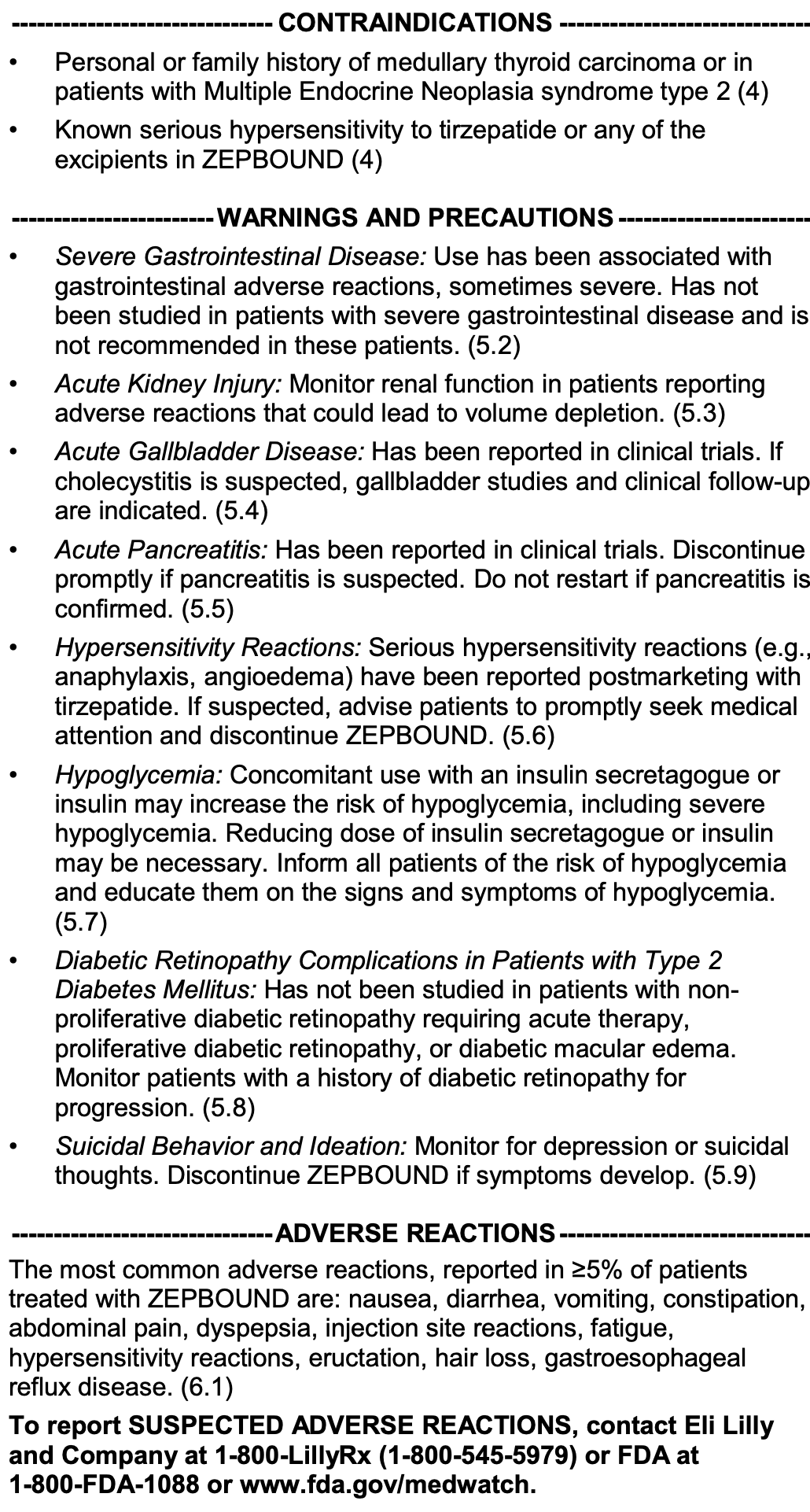
One large study of the related drug semaglutide showed that 17% of patients discontinued it because of side effects. Tirzepatide is likely similar. In addition, a small percentage of non-responders who lose less than 5% of body weight would not be motivated to continue it for weight loss.
Of the 70-80% of users who benefit without stopping it due to side effects or lack of weight loss, cost becomes the key determinant of continuing it forever. Weight gain is expected once a patient stops using the drug.
Cost Issues
Zepbound (tirzepatide) is already FDA-approved for weight loss. Significant weight loss (20% in these studies over a year) would likely control sleep apnea in the obese. So, the results are not surprising. I suspect the studies were done to obtain FDA approval for Zepbound as a treatment for sleep apnea, hoping that Medicare and other insurers will then cover it under their drug plans (as most insurers do not cover weight loss drugs for weight loss).
The FDA recently approved Wegovy (a competitor weight loss GLP-1 drug) for reducing major cardiovascular events in people with heart disease. Medicare will now cover Wegovy for that indication, opening up an enormous profit potential. I suspect Eli Lilly supported these studies to get similar FDA approval for use in sleep apnea, expecting that Medicare and other insurers would then pay to cover the cost.
www.Goodrx.com gives the cost without insurance as: "Get Zepbound for as low as $1,087.06, which is 16% off the average retail price of $1,296.02 for the most common version, by using a GoodRx coupon."
The manufacturer has a website that determines the cost of the drug for specific patients. When I tried to fill it out to get a savings coupon to see the price, I was disqualified because I have Medicare: "Card savings are not available to patients without commercial drug insurance or who are enrolled in any state, federal, or government funded healthcare program, including, without limitation, Medicaid, Medicare, Medicare Part D, Medicare Advantage, Medigap, DoD, VA, TRICARE®/CHAMPUS, or any state prescription drug assistance program."
I think savings cards are designed to cover all or most of one's co-pay if the insurance company is paying their substantial share of the drug. As expected in for-profit companies, the goal is to maximize profit, not save people money.
Regardless of who pays, if it costs about $1,000 a month, and even 10% of the 20 million Americans with moderate to severe sleep apnea use the drug, that would be a cost of $24 BILLION a year! I suspect many obese Americans who have not been tested for sleep apnea will be motivated to get a sleep study to have their insurance cover the drug for sleep apnea. Even if a deal is made to cut the cost in half, that is still $12 billion annually!
Denmark's Novo Nordisk, the GLP-1 antagonist drugs Wegovy and Ozempic manufacturer, now has a higher market capitalization than Denmark's yearly GDP. And that was before Medicare said it would now cover Wegovy for its FDA-approved cardiac indication. Much of that profit comes from the USA, where drug prices are sky-high compared to the rest of the world.
At least Eli Lilly, the manufacturer of the dual action GIP and GLP-1 antagonist drugs Zepbound and Mounjaro, is based in the USA. But it seems unfair that drug prices are so high. Can America afford it?