Toxic Fructose
Fructose causes a host of problems, including fatty liver. We should avoid it as much as possible, except for whole fruits.
As a primary care physician, the typical advice we gave to those with fatty liver disease was to lose weight, as there is no FDA-approved medication to treat it. But that advice might miss the mark a bit. Non-alcoholic fatty liver disease was noted in 16% of normal-weight people and in >23% of non-obese people (see link here).
For alcoholic fatty liver, we advise patients to stop alcohol. It appears that alcohol and fructose have some things in common. Neither are necessary for any biochemical requirements in humans (or mammals). They also share the same metabolism in the liver, which leads to fatty liver. They both have chronic toxicity when taken in more than small amounts.
Let's review:
- What is Fructose?
- Glycemic Index
- Intestinal Effects of Fructose Overdose
- Fatty Liver from Fructose Overdose
- Brain Effects from Fructose Overdose
What is Fructose?
We all know it's best to consume as little sugar as possible. The American Heart Association recommends that women limit sugar to 6 teaspoons daily (25 g) and men to 9 (38 g). Less would be better. Table sugar (sucrose) is a molecule of glucose and fructose bound together.
Our body needs glucose and can produce it when it is unavailable (gluconeogenesis), though there are problems when we overdose on it. Glucose is energy for cells all around the body. Insulin helps it get absorbed into cells like our muscles, where it is metabolized in mitochondria to produce energy, and excess is stored as glycogen. The liver also metabolizes glucose and stores it as glycogen.
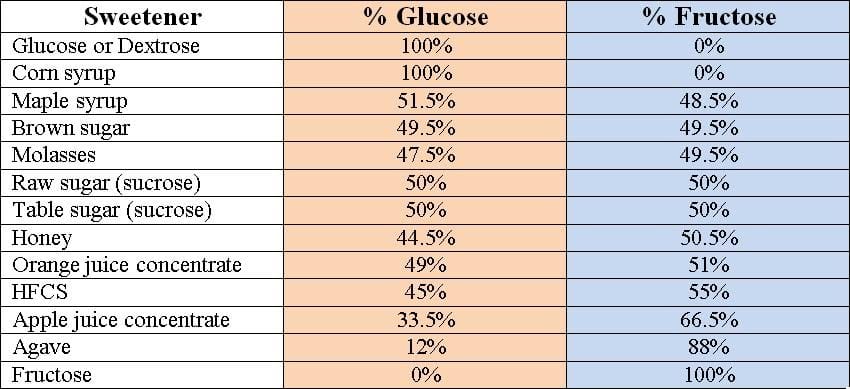
Fructose is not necessary. It mostly goes to the liver for processing. It may be the primary culprit behind a host of problems, including fatty liver. In addition to it being half of table sugar, it also comes in an ultra-processed form of high fructose corn syrup (HFCS, usually 55-65% fructose, remainder glucose). Because fructose syrup is sweeter than sugar and cheap, it is added to most processed and ultra-processed foods. Sugar-sweetened beverages (table sugar or HFCS) are a major problem for a healthy diet and are best avoided.
Fruits contain free fructose, free glucose, and sucrose (fructose + glucose) in varying combinations depending on the fruit. The benefits of raw, whole fruits are generally greater than any sugar harms due to the fiber and nutrients in fruits. However, one should limit high fructose, low fiber fruits such as gapes, have fruit in moderation, and consider 100% fruit juice as junk food as bad as sugar-sweetened sodas due to their separation from its fibers.
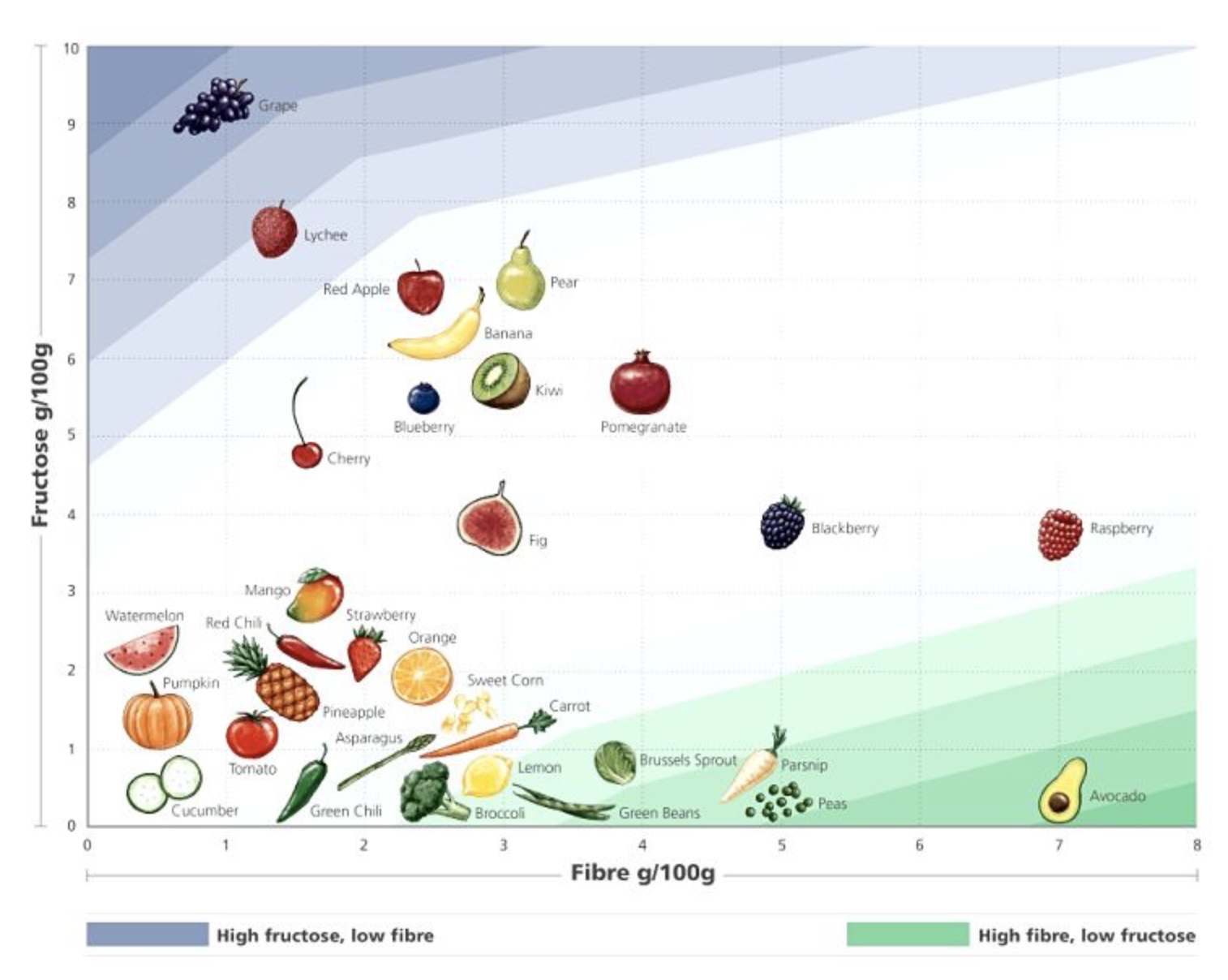
Today's fruits have been modified to be sweeter and have less fiber than hundreds of years ago. The Harvard Heart Health Newsletter from 2011 notes:
Fructose, also called fruit sugar, was once a minor part of our diet. In the early 1900s, the average American took in about 15 grams of fructose a day (about half an ounce), most of it from eating fruits and vegetables. Today we average four or five times that amount, almost all of it from the refined sugars used to make breakfast cereals, pastries, sodas, fruit drinks, and other sweet foods and beverages.
How much fructose should we limit ourselves to? The American Heart Association recommends that women limit sugar to 6 teaspoons daily (25 g) and men to 9 (38 g). So our fructose intake should be no more than half of that since table sugar is half glucose, half fructose. Ideally, use no fructose except for whole fruits. Avoid liquids with added sugars or artificial sweeteners, so drink water and plain milk without added sugars if desired. Read labels and avoid anything with fructose or added sugars of any type to the extent possible.
Glycemic Index
The Glycemic index "is a number from 0 to 100 assigned to a food, with pure glucose arbitrarily given the value of 100, which represents the relative rise in the blood glucose level two hours after consuming that food."
Since a smaller glucose spike after eating is a good thing (implies smaller insulin spikes), the glycemic index is often used to mistakenly think a sweetener with a lower glycemic index is better for us. For example, Agave has a low glycemic index because it has 88% fructose. The fructose does not cause a glucose spike or an insulin spike. But the fructose in the average American's diet does other damage as we metabolize it. A low glycemic index is not necessarily healthier if that just means it is mostly fructose.
Intestinal Effects of Fructose Overdose
Fructose is passively absorbed in the small intestine, primarily by GLUT5. Douard & Ferrais (2012) explain, "GLUT5 and GLUT2 are members of the facilitative glucose transporter family and are the major fructose transporters in the body." Glut5 only transports fructose. Glut2 is a low affinity transporter that can also transport other sugars.
Not all fructose can be absorbed, as explained by Douard & Ferrais (2012) :
Fructose malabsorption by human adults, as evaluated by breath hydrogen, increases as a function of dietary fructose concentration, so that for every 10 g increase in fructose dose, the number of positive breath hydrogen tests increases by 15%. At 50 g, a dose well below the average daily fructose intake in the USA, about 60–80% of adults experience some form of malabsorption, suggesting that intestinal absorptive capacity for fructose in some people is insufficient at current rates of fructose intake.
A 2020 research paper explains, "Excessive intake of fructose causes intestinal-barrier deterioration and endotoxaemia." The high fructose diet caused the tightly packed cells covered with mucus that line the intestine to break down letting bacteria and toxins into the bloodstream (leaky gut). This allows the bacteria and toxins to go to the liver causing inflammation.
A 2022 paper by Urminská, et al. explains that after the amount of fructose that can be absorbed by the small intestine has been maxed out, the excess fructose goes to the large intestine where it
- Harms the microbiome, which in turn can affect the genes involved in metabolic pathways
- Ferments in the large colon causing bloating, abdominal discomfort, and/or diarrhea
Excess fructose passes into the large intestine, where it becomes a fermentable substrate for microorganisms. High fructose intake has been reported to alter the composition of microcenosis, leading to a reduced bacterial diversity and changes in the expression patterns of genes involved in specific metabolic pathways... Any fructose not absorbed by the small intestine is fermented by colon bacteria producing short-chain fatty acids and gases, such as hydrogen and carbon dioxide, which may cause bloating, abdominal discomfort, and/or diarrhea in some individuals. Hydrogen produced during the fermentation process is partially absorbed into the bloodstream and enters the lungs, allowing it to be detected in the exhaled air. This process is used in the diagnosis of fructose malabsorption, and is called the hydrogen breath test. Fructose intolerance, manifested by abdominal pain, flatulence, diarrhea, nausea, and vomiting, has also been diagnosed in some patients with indigestion.
From: FERMENTABLE OLIGOSACCHARIDES, DISACCHARIDES, MONOSACCHARIDES AND POLYOLS AND THEIR ROLE IN FOOD DIGESTION. Available from: https://www.researchgate.net/publication/358776100_FERMENTABLE_OLIGOSACCHARIDES_DISACCHARIDES_MONOSACCHARIDES_AND_POLYOLS_AND_THEIR_ROLE_IN_FOOD_DIGESTION [accessed May 06 2024].
Fatty Liver from Fructose Overdose
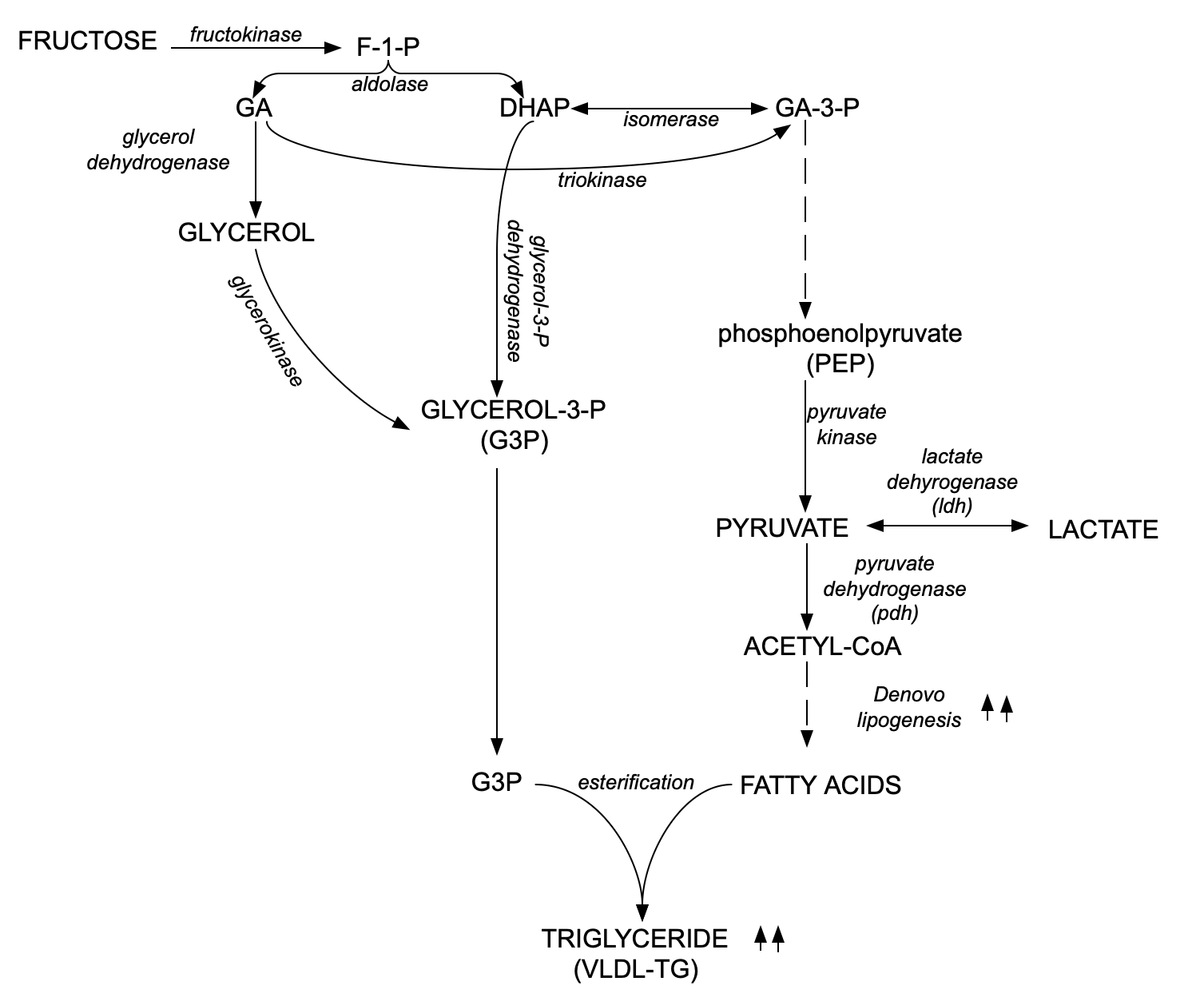
The entry of fructose into the liver starts a metabolic chain, and if there is enough fructose in the liver, then it creates:
- Triglycerides. Some stay in the liver causing fatty liver. Some are packed into very low-density lipoproteins (VLDL) and go into the bloodstream.
- Droplets of fat (lipogenesis) to accumulate, causing nonalcoholic fatty liver disease. This can progress to to cirrhosis (an accumulation of scar tissue) and eventual liver failure, needing a transplant. An ultrasound (or CT or MRI scan) is needed to see this.
- Uric acid, which may promote gout.
- Increases your blood pressure by downregulating the nitric acid that allows your vessels to relax or dilate.
- free radicals that can damage DNA and cells.
One of the major differences in the liver metabolism of glucose and fructose is that glucose metabolism is controlled, while fructose metabolism is uncontrolled. The control of glucose metabolism is the negative regulation by phosphofructokinase. Fructose has no negative regulation, so it continuously enters the glycolytic pathway endlessly, creating triglycerides, VLDL, and uric acid as long as there is fructose left. Therefore, the main control we need on fructose is limiting our ingestion.
Brain Effects from Fructose Overdose
The SugarScience website states that leptin
is our natural appetite suppressant that tells our brains we are full and can stop eating. Imbalanced insulin levels, along with high consumption of certain sugars, such as fructose, has been linked to a condition called leptin resistance, in which the brain no longer "hears" the message to stop eating, thus promoting weight gain and obesity.
Avoiding fructose except in whole fruits and limiting sugar (glucose + fructose) to the American Heart Association recommendation of women limited to 6 teaspoons daily (25 g) and men limited to 9 teaspoons daily (38 g) will let the natural appetite control mechanisms work better.
Resources to Understand Toxic Fructose
 Leung, T.M., & Nieto, N.
 Ng, S.W., Slining, M.M., & Popkin, B.M.